
Originally Posted On: https://www.ucanpack.com/blog/post/how-do-you-know-when-your-products-need-heavy-duty-boxes-instead-of-standard-ones
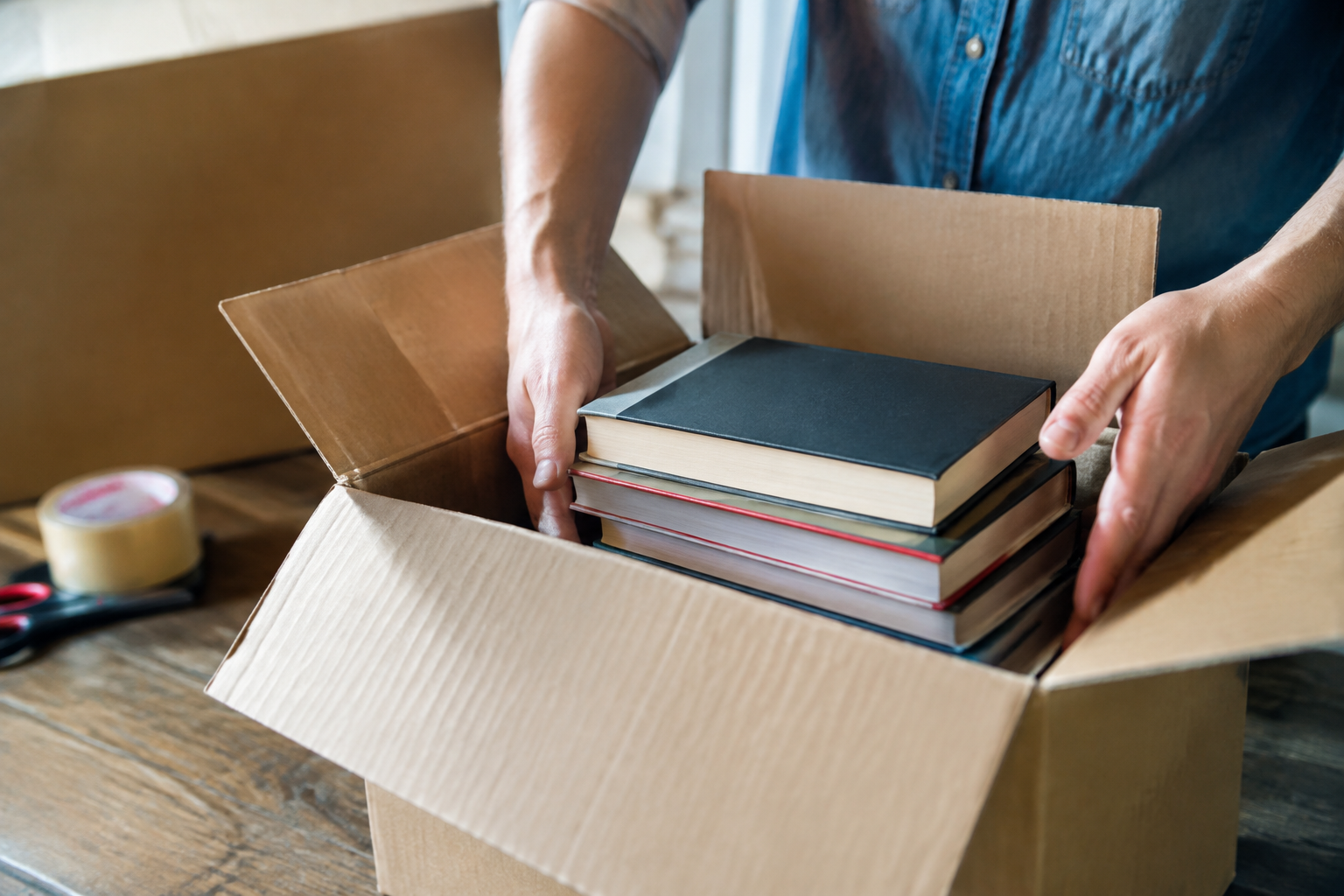
A box doesn't fail at the tape. It fails at the wall.
Anyone who's spent time in a packaging lab has watched it happen: a carton full of hardcovers sits fine on the floor, then the sides bow, the bottom bulges, and everything lands on the driveway. First-time movers and shippers get caught by this all the time, especially when they're packing books, tools, and kitchenware. Dense stuff is brutal on cardboard.
So how do you know when standard cartons won't cut it — heavy-duty boxes are the smarter buy? Three signals give it away: how much the load weighs, how high the boxes will stack, and how far they'll travel. Get those right, and you won't need a spec sheet. You'll need a bit of plain-English judgment (and about five minutes with a tape measure).
How heavy does a load have to be before you need heavy-duty boxes?
A packer once loaded a standard box with 52 lbs of hardcover books, lifted it by the bottom flaps, and watched the bottom bow like a hammock. Seconds later it split. Anything over about 40 lbs per box, or any box that sags when you lift it, needs heavy duty boxes.
-
Single-wall: reliable up to roughly 40 lbs.
-
Double-wall: handles 65 to 80 lbs.
Dense stuff fails first. Books, tools, and canned goods pack tons of weight into a small footprint, so the bottom panel takes a beating. A big, light box of pillows? No problem. For lighter paperbacks, book mailers rigid work well.
What do ECT ratings and double wall construction actually mean?
ECT stands for edge crush test. It measures how much pressure the box edge takes before it buckles, which is basically stacking strength. ECT-32 suits light loads. ECT-44, ECT-48, and ECT-51 step up from there. Double wall simply means two layers of fluting sandwiched between three liners.
Here's the failure story. A single-wall box of kitchenware held fine at the door. By the third stack in the truck, it folded. The box carried the weight, but not the weight above it.
Which flute type holds up best for heavy items?
-
A-flute: thick and cushiony, great for fragile items, weaker under stacking.
-
B-flute: the standard. Good for everyday loads and crisp printing.
-
C-flute: the stacking pick. Strong crush resistance for moving and storage.
-
E-flute: thin and light. Small items only.
For the heaviest jobs, pair them. Double-wall BC construction is the go-to for tools and books.
What are the best heavy-duty boxes for moving books, tools, and kitchenware?
Small beats big. For dense items, pick small to medium double-wall boxes, around 16x12x12 or 18x14x12, so the weight stays manageable and the walls don't buckle.
-
Small boxes (6x4x4 up to compact cubes): books, hand tools, canned goods. A full book box can hit 50 lbs fast, so smaller is safer.
-
Medium boxes: kitchenware, small electronics, and plates stood on edge. Wrap each piece, then pack the gaps with void fill packaging materials so nothing shifts.
-
Extra-large heavy-duty moving boxes: light, bulky stuff only. Think pillows, lampshades, and bedding. Fill one with cast iron and the bottom gives out.
Flat items like posters or documents don't need a big carton at all. Slip them into document mailers with cardboard and keep them out of the heavy stack.
Do heavy-duty moving boxes with handles hold up better?
Not really. Handle cutouts make lifting easier, but they punch holes in the wall and cut its stacking strength a little. In practice, they suit loads under about 35 lbs.
For anything heavier, use a solid-wall double-wall carton and carry it from the bottom. Either way, reinforce the base. Run three strips of tape across the bottom seam, one down the center and one on each flap edge, then repeat the same pattern on top. A taped bottom is what keeps a loaded box from dropping out on the porch.
Can cardboard replace heavy-duty plastic storage containers with lids and wheels?
Is cardboard strong enough to skip the plastic bins? Short answer: for one-way moves and shipping, yes. For long-term storage in garages, porches, and damp basements, no.
Here's how the three main options compare.
-
Double-wall cardboard: Handles 40-65 lbs when packed right and stacks well while dry. Moisture kills it. One wet night and the flutes go soft.
-
Banker's boxes: Fine for paper. They crush fast under tools or books stacked three high.
-
Waterproof plastic containers with lids: Shrug off humidity, stack for years, and get reused. They cost more up front and take up space when empty.
When wheels and lids matter
Wheels pay off in basements, attics, and repeat moves.
A 50-lb bin you can drag beats one you have to carry down narrow stairs. Tight lids also keep out dust and pests, which cardboard can't do.
Why used or free boxes are risky
Free boxes look like a bargain. They aren't. Worn flutes have already lost crush strength — hidden moisture damage won't show until the bottom drops out mid-lift. Never trust a used box with books, tools, or kitchenware.
For shipping extras, new foam sheets for packaging protect fragile items inside a sturdy carton. Sending soft goods? biodegradable poly mailers keep them out of boxes entirely.
How do you pack and seal a heavy-duty box so it doesn't collapse?
Roughly 60% of box failures start at the bottom seam, not the walls. So the short answer: tape the bottom in an H-pattern, fill every void, and keep the heaviest items at the base.
-
Pick the right size so nothing shifts. A tall box with a few books rattling around fails fast.
-
Tape the bottom seam and both edges, not just the center strip. That's the H-pattern.
-
Layer heavy items low (tools, books, cast iron) and light items on top.
-
Fill gaps with crumpled paper or bubble wrap. Empty space is what lets a load slam sideways.
-
Seal and press-test the lid by hand. If the top flexes or bows, add more fill.
Tape choices that hold up
Standard clear tape is fine for a 15-pound box of linens. Not for 50 pounds of kitchenware. Reinforced and filament tape carry fiberglass strands that resist splitting, and that's what you want on a double wall carton. Two or three passes beat one cheap pass every time.
Dividers and layer pads
Cardboard sheets work as dividers between plates or as flat pads between layers, spreading weight so the bottom doesn't punch through. For delicate items, wrap first with tissue paper for packaging, then add a sheet between layers. Wondering about glass-front pieces? Read up on how to ship framed art safely before you seal anything.
Where can you buy heavy-duty shipping boxes, and what should you check first?
Buying the closest box isn't the smart move. A big-box aisle is fine for a weekend move, but it rarely lists the specs that decide whether a 50-pound load survives a truck. Check three things before you pay: ECT rating, wall type, and dimensions.
Nearby shop or online order?
Searching heavy-duty shipping boxes near me gets you boxes today, usually in a handful of sizes. Online suppliers carry hundreds of sizes — publish the specs. Compare the listed ECT, single or double wall, and inside dimensions (not outside). Then match the box to your heaviest item.
Reading the stamp on the bottom flap
Flip the box over.
The round box maker's certificate lists the ECT rating, a weight limit — the manufacturer. A 32 ECT single wall suits books in small boxes. Tools and kitchenware want 44 ECT or higher. No stamp? Skip it.
Order samples first
Samples catch wrong-size mistakes before you buy 100 boxes. UCANPACK offers free samples, so UCANPACK buyers can load a real box with real stuff and shake it.
-
Double-wall and C-flute corrugated shipping boxes
-
Hundreds of sizes, bundles starting small
-
Stock items ship within 3 business days
Need labels too? Pick up packing list envelopes with the same order.
International shipments
Overseas freight means more handling and stacking. Step up to double wall for anything heavy or crushable.
Most box failures are predictable. A mover who checks three things before packing a single book can avoid nearly all of them: how much the load weighs, how high the boxes will be stacked, and how long the trip runs. Anything near 40 pounds, anything headed for the bottom of a pile, and anything riding a long haul belongs in heavy-duty boxes with double-wall walls and a solid ECT stamp.
Size matters just as much as strength. Dense items like books and tools go in small boxes, so the weight stays manageable, and the walls aren't asked to do the impossible. Bulky, light things get the big cartons. Tape the bottom in an H pattern, fill every gap, and press the lid before anyone lifts it.
Shoppers who aren't sure what to buy have an easy first move. Order a few samples, load them with the heaviest items in the house, and lift them by the bottom flaps. A box that sags in the test room will fail in the truck. Ucanpack offers free samples of its double-wall and C-flute corrugated shipping boxes, so start there, test two sizes, and order the bundle that passes.
UCANPACK
753A Tucker Rd
Winder, GA 30680
1 201-975-6272
https://ucanpack.com


