
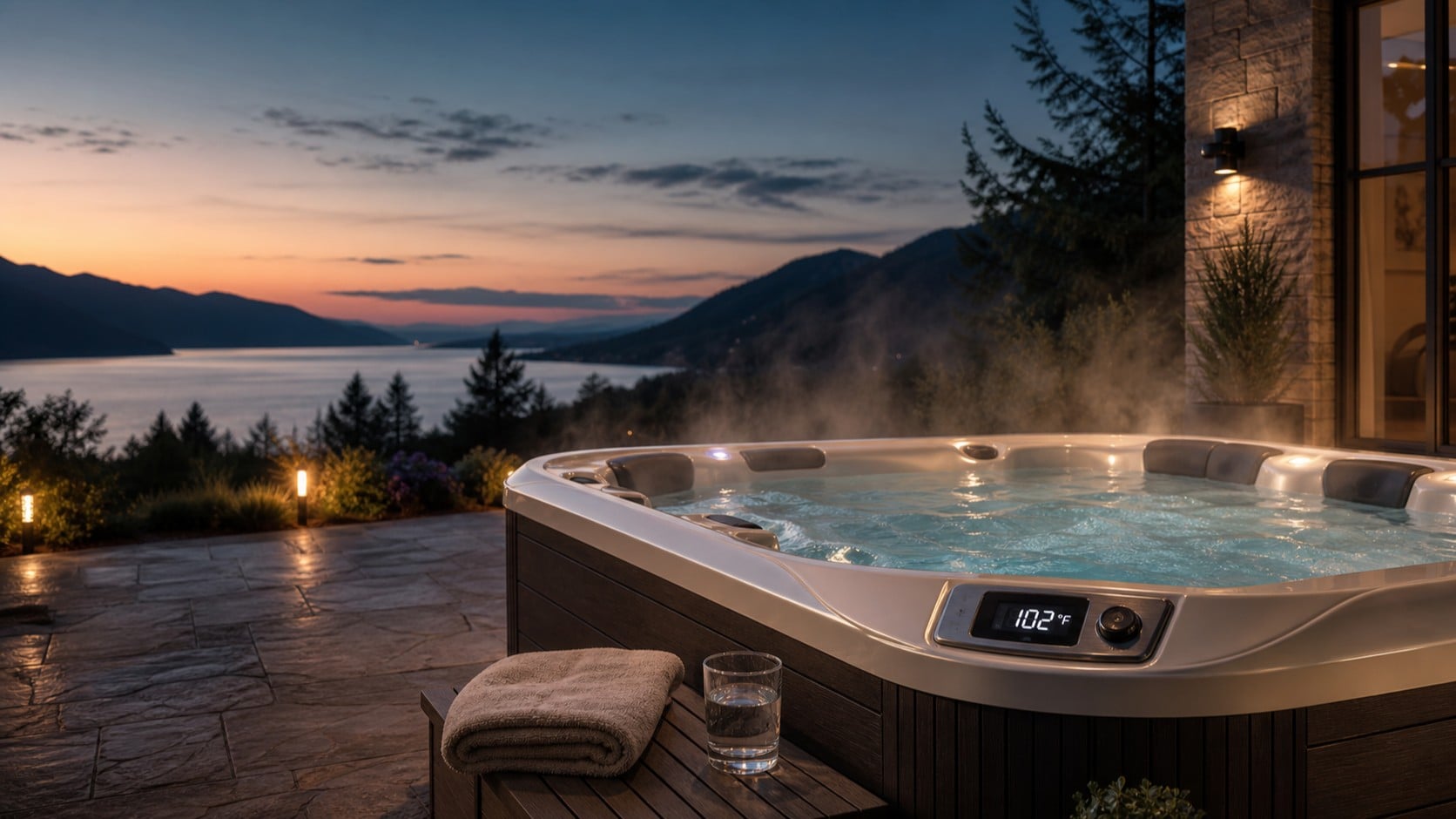
Key Takeaways:
- The U.S. Consumer Product Safety Commission (CPSC) sets the maximum safe hot tub temperature at 104°F (40°C); never go above it.
- Most adults find the sweet spot between 100°F and 102°F, balancing comfort with effective heat therapy.
- Children, elderly users, and pregnant women all have lower recommended temperature thresholds; ignoring these can lead to serious health risks.
- Seasonal conditions should influence your temperature settings; summer soaks often call for cooler water, while winter sessions can safely hold the upper range.
- The right temperature varies by user and environment.
Getting the temperature right in a hot tub is more than a comfort preference; it’s a safety decision. Whether soaking solo after a long week or sharing the tub with family, understanding what temperatures are safe, who they’re safe for, and when to adjust them can make all the difference between a relaxing experience and a health risk.
The Sweet Spot: 100°F-104°F
For most healthy adults, the ideal hot tub temperature falls between 100°F and 104°F (37.8°C-40°C). This range offers enough warmth to ease muscle tension, improve circulation, and promote genuine relaxation without pushing the body into dangerous territory.
At 104°F, sessions should be kept to 15-20 minutes; at 100°F or lower, soaks can extend comfortably to 30-45 minutes. Even within safe temperature limits, the body can begin to experience dehydration, lightheadedness, or a drop in blood pressure if soak time runs too long. Staying mindful of duration matters just as much as the dial setting.
Who Sets the Rules on Temperature?
Temperature guidelines for hot tubs aren’t arbitrary; they’re grounded in consumer safety research and years of medical consensus.
CPSC’s 104°F Maximum
The U.S. Consumer Product Safety Commission (CPSC) officially caps residential hot tub temperatures at 104°F (40°C). This ceiling exists for a concrete reason: water temperatures above 104°F can cause rapid overheating, elevated heart rate, dizziness, fainting, dehydration, and in serious cases, heat stroke. Manufacturers are required to comply with this standard, and most modern hot tubs are factory-limited to prevent exceeding it.
Why 100°F-102°F Is the Popular Choice
While 104°F is the legal maximum, the most commonly preferred range among hot tub users sits between 100°F and 102°F (37.8°C-39°C). Experts from Collective Relaxation note that this slightly lower range still delivers meaningful heat therapy while giving the body more tolerance for longer sessions. New hot tub users, in particular, are often advised to start even lower, around 98°F (36.7°C), to let the body acclimate before gradually increasing the heat.
Temperature Guidelines by User
Not everyone in the tub should be soaking at the same temperature. Age, health status, and certain life stages all affect how the body handles heat, and getting this wrong carries real consequences.
Children: Lower Heat, Shorter Sessions
Children’s bodies are far less efficient at regulating internal temperature than adults, which makes standard hot tub settings genuinely risky for them. Here’s what the guidelines look like by age:
- Under 5 years old: Most pediatric experts recommend avoiding hot tubs with heated water entirely. Small children cannot dissipate heat fast enough to stay safe.
- Ages 5-12: Water temperature should stay at or below 98°F (36.7°C), sessions should be capped at 5 to 10 minutes, and constant adult supervision is non-negotiable.
Even within these guidelines, watching for signs of discomfort, like flushed skin, fatigue, or irritability, is a must. When in doubt, get them out.
Elderly Users and Those with Health Conditions
Older adults and individuals managing conditions like cardiovascular disease or diabetes often have reduced capacity to tolerate sustained heat. For this group, a temperature range of 93°F-100°F (33.9°C-37.8°C) is generally more appropriate. The lower end of that range may feel more like a warm bath than a hot tub, but it significantly reduces the risk of dangerous blood pressure changes or cardiac stress.
Anyone in this category should consult a physician before using a hot tub regularly – not as a formality, but because individual health profiles vary widely and a doctor can provide personalized guidance.
Pregnant Women: Stay at or Below 100°F
Pregnancy requires a more cautious approach to hot tub use. If a healthcare provider has cleared it, the water temperature should stay at or below 100°F (37.8°C), and soak time should be limited to 10 minutes or less. Elevated core body temperature during pregnancy is associated with complications that make exceeding this threshold a serious concern, not just a guideline to bend.
First Trimester: Highest Risk of Fetal Harm
The first trimester carries the greatest sensitivity to heat exposure. During this period, elevated maternal body temperature has been linked to potential risks of neural tube defects and other fetal developmental issues. Many medical professionals advise avoiding hot tubs entirely during the first trimester, regardless of temperature setting. Even a brief soak at 102°F can raise core body temperature to levels considered unsafe for early fetal development.
Best Temperature for Hydrotherapy
Hot tubs have long been used for hydrotherapy, the therapeutic use of warm water to relieve pain, support recovery, and reduce stress. For hydrotherapy to be most effective, water temperature generally needs to sit between 100°F and 104°F (37.8°C-40°C).
Within this range, warm water promotes muscle relaxation, improved blood circulation, and reduced joint stiffness, benefits particularly valuable for people managing arthritis, sports recovery, or chronic back pain. Heat causes blood vessels to dilate, increasing flow to muscles and helping flush out metabolic waste. Pairing the right temperature with targeted jet use amplifies these effects significantly. Even for therapeutic purposes, keeping sessions within the 15-30 minute window remains important to prevent overheating.
Seasonal Temperature Adjustments
Ambient temperature and humidity directly affect how the body experiences heat in water, which means the same dial setting can feel very different in July versus January.
Summer: Cool It Down
In warmer months or hotter climates, many hot tub owners drop their water temperature to between 95°F and 100°F (35°C-37.8°C). At this range, the tub still delivers a pleasant effect without amplifying the heat already in the environment. Some users go even lower for a genuinely refreshing soak rather than a warming one. Personal comfort should be monitored closely – heat stress can arrive faster in summer conditions, even at temperatures that would feel fine in cooler weather.
Winter: Hold the Safe Range
Cold weather naturally makes higher temperatures more appealing, and in winter it’s generally comfortable to maintain the tub between 100°F and 104°F. The contrast between cold air and warm water is part of what makes winter soaking so satisfying. That comfort, however, can also mask how long someone has been in the water. Prolonged exposure, even at safe temperatures, still carries the same risks of dehydration and blood pressure changes. Set a timer and stick to it.
When Heat Becomes a Health Risk
Exceeding 104°F can become medically dangerous within minutes. The body’s cooling mechanisms struggle to compensate once water temperature climbs beyond the CPSC maximum, leading to a rapid sequence of symptoms:
- Overheating and excessive sweating
- Elevated heart rate and cardiovascular strain
- Dizziness and nausea
- Fainting, which is especially dangerous in or near water
- Heat stroke, a medical emergency requiring immediate intervention
Even within the safe range, prolonged soaks without hydration or breaks can lead to dehydration and a sudden drop in blood pressure upon standing, a common cause of post-soak fainting. Drinking water before and during a session is a simple habit that significantly reduces this risk.
Stay Safe: Keep It Between 100°F and 104°F
The guidance is consistent across regulatory bodies, medical professionals, and experienced hot tub users: 100°F to 104°F is the established safe zone for healthy adults, with meaningful adjustments required for children, elderly users, pregnant women, and those with underlying health conditions. Seasonal context matters too; what feels right in winter may be excessive in summer.
Dialing in the right temperature is an ongoing habit of checking conditions, knowing who’s in the tub, and respecting the limits that keep soaking a pleasure rather than a hazard. The investment of attention is small; the payoff in safety and enjoyment is significant.
Collective Relaxation
jerry@CollectiveRelaxation.com
+1 929 493 4366
194 Woehrle Avenue
STATEN ISLAND
NY
10312
United States


