
Key Takeaways:
- Wasp nests return to the same spots because wasps follow scent trails left by previous colonies and are drawn to specific structural features like protected overhangs and food sources.
- Different wasp species require targeted prevention strategies – yellow jackets nest underground, paper wasps prefer eaves, and hornets build large aerial nests.
- Professional treatments outperform DIY methods because they eliminate entire colonies, not just visible wasps, and include ongoing monitoring to prevent reestablishment.
- Combining property modifications, natural deterrents, and early detection creates the most effective long-term wasp prevention system.
Nobody wants to deal with the same wasp problem year after year. Yet countless homeowners in Fuquay-Varina (and indeed, across North Carolina) find themselves battling recurring infestations in identical locations around their property. Understanding why wasps return to specific spots and implementing proven prevention strategies can break this frustrating cycle for good.
Why Wasp Nests Keep Returning to the Same Spots
Wasps are creatures of habit, and their nest site selection follows predictable patterns. Queen wasps may return to their original home area to establish new colonies, and pheromones play a role in wasp communication and nest site selection. These chemical signals can influence future nesting decisions, though different species have varying behaviors regarding nest reuse.
Beyond chemical attraction, wasps consistently choose locations that offer three essential elements: protection from weather, proximity to food sources, and defensive advantages. Local pest control professionals regularly find repeat nests under the same eaves, in identical wall voids, and around the same outdoor dining areas because these spots continue to meet wasp colony requirements year after year.
The timing of nest establishment also plays a crucial role. Queen wasps emerge from winter hibernation in March and April, actively scouting for nest sites during this narrow window. Properties that attracted wasps previously often feature the same appealing characteristics – adequate shelter, nearby water sources, and abundant insect prey – making reoccupation almost inevitable without intervention.
Know Your Enemy: Common Wasp Species and Their Behaviors
Effective prevention starts with identifying which wasp species you’re dealing with, as each type has distinct nesting preferences and behavioral patterns that influence prevention strategies.
1. Yellow Jackets: The Underground Threat
Yellow jackets are among the most aggressive stinging insects in Fuquay-Varina, building hidden nests underground, inside wall voids, and in attic spaces. These colonies can house 1,000 to 4,000 workers by late summer, making them particularly dangerous when disturbed. Yellow jackets are scavengers attracted to protein sources like pet food and garbage, often establishing nests in areas with readily available food supplies.
Their underground nesting behavior makes detection challenging until colonies reach threatening sizes. Look for steady streams of wasps entering and exiting small ground holes, especially around landscaped areas, mulch beds, and the base of structures. Unlike other species, yellow jackets can sting repeatedly and release alarm pheromones that trigger coordinated attacks from the entire colony.
2. Paper Wasps: Eave and Porch Nesters
Paper wasps construct distinctive umbrella-shaped nests under eaves, porch ceilings, deck railings, and playground equipment. These colonies remain smaller than yellow jacket nests, typically housing 20 to 75 wasps, but defend their territory aggressively when threatened. Paper wasps have long, dangling legs visible during flight and display brown coloration with yellow or reddish markings.
While paper wasps provide beneficial pest control by eating caterpillars and garden insects, nests near doorways and high-traffic areas create daily sting risks. Their exposed nest construction makes early detection possible, but removal requires careful timing and proper protective equipment to avoid provoking defensive responses.
3. Bald-Faced Hornets and European Hornets: The Aggressive Giants
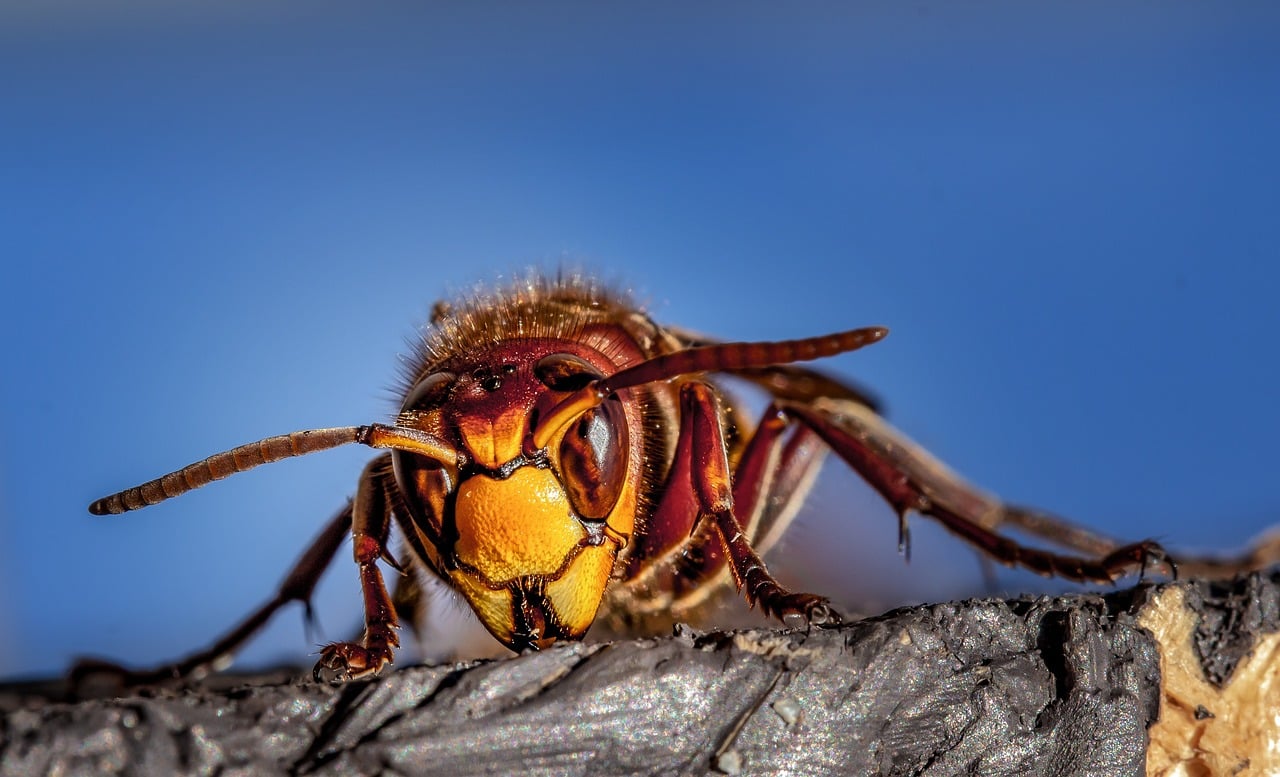
Bald-faced hornets create large, enclosed paper nests that hang from tree branches, building overhangs, and utility poles. These imposing structures can grow larger than basketballs by season’s end, housing 400 to 700 workers. Bald-faced hornets are extremely territorial, posting sentries near nest entrances and aggressively pursuing perceived threats.
European hornets, the largest stinging insects in North Carolina, prefer nesting inside hollow trees, wall voids, and attic spaces. These nocturnal hunters can reach 1.5 inches in length and are uniquely attracted to porch lights and exterior lighting after dark. Their size allows them to deliver notably more painful stings with larger venom payloads, making professional removal essential for colonies near human activity.
Remove What Attracts Them: Essential Property Changes
Creating an unwelcoming environment for wasps requires systematic elimination of the conditions that draw them to your property in the first place.
1. Eliminate Food Sources That Draw Wasps
Wasps are opportunistic feeders attracted to both protein and sugar sources throughout their seasonal cycle. Early season colonies focus on protein-rich foods like insects, pet food, and meat scraps to feed developing larvae. Late summer colonies shift toward sugary substances including fallen fruit, soda spills, and nectar sources as worker wasps prepare for winter.
Implement strict sanitation practices around outdoor areas. Secure garbage cans with tight-fitting lids and clean them regularly to eliminate food residue. Remove pet food bowls immediately after feeding times and clean up barbecue areas thoroughly after outdoor cooking. Harvest ripe fruit promptly and remove fallen fruit from the ground, as fermenting fruit creates particularly attractive feeding sites.
2. Seal Entry Points and Structural Gaps (Only After Confirming No Wasps Present)
Structural modifications form the foundation of long-term wasp prevention, but timing these repairs correctly prevents accidentally trapping active colonies inside walls or voids. Conduct thorough inspections during late fall or winter when wasp activity has ceased to identify potential entry points without disturbing active nests.
Focus on common entry areas including gaps in siding, damaged soffit vents, holes around utility penetrations, and weep holes in brick construction. Use appropriate materials for each situation: expanding foam for small gaps, metal mesh for larger openings, and properly fitted vent covers for attic and crawl space access points. Pay special attention to areas where different building materials meet, as these transition zones often develop gaps over time.
3. Use Natural Plant Deterrents
Strategic landscaping with specific plant varieties can create natural barriers that discourage wasp activity around your property. Certain plants produce strong scents that wasps find objectionable, effectively creating no-fly zones when planted in appropriate locations.
Mint varieties including peppermint and spearmint release compounds that interfere with wasp navigation and feeding behaviors. Plant these herbs near outdoor dining areas, doorways, and known nesting sites for maximum effectiveness. Eucalyptus trees and shrubs provide similar deterrent effects while adding landscape value to your property.
Effective Deterrent Strategies That Actually Work
Beyond eliminating attractants, specific deterrent tactics can exploit wasp behavioral patterns to prevent nest establishment on your property.
Deploy Decoy Nests to Exploit Territorial Behavior
Wasps are highly territorial creatures that typically avoid building new nests within certain distances of existing colonies. This natural behavior pattern can be exploited using decoy nests strategically placed around your property to create the illusion of occupied territory.
Decoy nests may work for certain species like paper wasps under specific conditions (early spring placement, visible positioning, dry weather), but their effectiveness is limited and not universal for all wasp species. Install decoy nests under eaves, on porch ceilings, and in other prime nesting locations before wasp season begins in early spring. Replace or reposition decoys annually, as weathering reduces their effectiveness over time.
For maximum impact, combine decoy nest placement with other deterrent strategies. The territorial effect works best for paper wasps and some hornet species, while yellow jackets may be less influenced by aerial decoys due to their ground-nesting preferences. Understanding species-specific behaviors in your area helps optimize decoy placement strategies.
Early Detection and Removal of Starter Nests
The most effective wasp prevention strategy involves regular monitoring and immediate removal of small starter nests before colonies become established. Queen wasps begin nest construction in early spring with structures no larger than golf balls, making removal relatively safe and straightforward during this initial phase.
Conduct weekly property inspections from March through June, focusing on areas where nests appeared previously. Check under eaves, porch ceilings, deck railings, and other protected locations where queens commonly establish new colonies. Use binoculars for high or difficult-to-access areas to maintain safe distances during inspections.
Why DIY Methods Fail and Professional Treatment Succeeds
Understanding the limitations of do-it-yourself approaches versus professional treatment methods reveals why recurring wasp problems persist despite homeowner efforts.
The Problem with Store-Bought Sprays
Over-the-counter wasp sprays create a false sense of security by killing visible wasps while leaving colony structures and hidden members unharmed. These products typically provide contact kill of individual wasps but lack the residual activity needed to eliminate entire colonies, especially those nested inside walls or underground.
Store-bought treatments often anger surviving colony members without neutralizing the threat, potentially increasing aggressive behavior and sting risks. Partial treatments may temporarily reduce visible activity while allowing queens and developing larvae to survive, leading to colony recovery within days or weeks of initial treatment.
How Pros Target the Entire Colony
Professional wasp control employs specialized techniques and products designed to eliminate complete colonies rather than individual insects. Licensed technicians use targeted chemical applications that create lethal transfer effects, allowing returning foragers to carry treatment materials back into nests and distribute them throughout the colony.
Advanced treatment methods address both visible nests and hidden colony segments that homeowners cannot access safely. For yellow jacket nests buried underground or tucked inside wall voids, professionals inject specialized dusts or liquid treatments directly into entry points, ensuring complete colony contact regardless of nest location.
Ongoing Monitoring and Prevention Plans
Professional pest control services can provide continuous monitoring that prevents new colony establishment before problems develop. Quarterly service visits may include inspection of previous nest sites, identification of new starter colonies, and preventive treatments around high-risk areas.
Service guarantees typically include free re-treatment if wasps return between scheduled visits, providing peace of mind and cost protection for property owners. This ongoing support ensures that minor wasp activity gets addressed before it develops into major infestations requiring expensive emergency treatments.
How Complete Prevention Systems Keep Wasps Away for Good
The most effective wasp prevention combines multiple strategies into integrated systems that address attraction factors, nesting opportunities, and early intervention simultaneously. Successful long-term control requires year-round vigilance rather than reactive responses to established colonies.
Prevention begins with thorough property assessments that identify and prioritize risk factors specific to each location. Professional evaluations consider structural features, landscaping elements, food sources, and historical nest sites to develop customized prevention strategies that address the unique characteristics attracting wasps to individual properties.
Seasonal treatment schedules coordinate preventive applications with wasp life cycles for maximum effectiveness. Early spring perimeter treatments create barriers that discourage nest establishment, while summer monitoring catches breakthrough activity before colonies mature. Fall treatments eliminate overwintering sites and reduce spring queen populations. The result? If all goes to plan, a wasp-free home.
Holly Springs Pest Control
116 Moore Hill Way
Holly Springs
NC
27540
United States


